Plenty of Verona homes have a flat or nearly flat roof somewhere: over a front porch, a sunroom, a rear kitchen addition or a garage. These sections can't take shingles, and they're often where the first leak in the house shows up.
Flat porch and addition roofs use one of three membranes: EPDM rubber, TPO or modified bitumen. EPDM typically lasts about 20 to 30 years, TPO about 15 to 25 and modified bitumen about 10 to 20, and the seams and wall joints decide how well any of them holds up.
Choosing well, and watching the one you have, prevents most of those leaks.
Why can't shingles go on a flat roof?
Shingles can't go on a flat roof because they shed water by overlapping, which only works on a slope. Most shingle manufacturers require a pitch of at least 2 in 12, and below that water sits long enough to back up under the overlaps.
That's why porch roofs that were shingled at too low a pitch so often leak along their bottom edge. The fix is a membrane, not more shingles.
Which flat roof membrane is best?
The best flat roof membrane depends on the job. EPDM rubber suits simple porch and garage roofs and is easy to repair, TPO reflects heat and suits sunrooms, and modified bitumen handles foot traffic, such as a roof used as a deck.
| Membrane | Typical life | Good for |
|---|---|---|
| EPDM (rubber) | 20 – 30 years | Porches, garages, simple shapes |
| TPO | 15 – 25 years | Sunrooms and sunny additions |
| Modified bitumen | 10 – 20 years | Areas that get foot traffic |
Where do flat roofs leak?
Flat roofs leak at three points far more than anywhere else: the seams between membrane sheets, the joint where the flat roof meets a house wall, and the edges and drains where water should leave the roof.
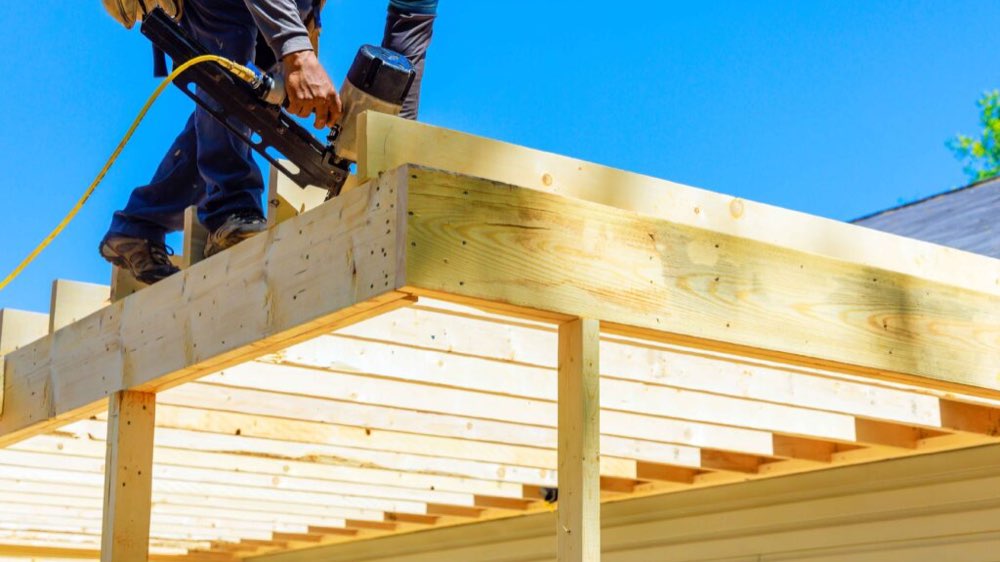
The wall joint is the big one. The membrane should run up the wall behind the siding or under a counter-flashing, not stop at a bead of sealant. Ponding water is the other warning sign; puddles still there two days after rain mean the roof needs better pitch or drainage.
How do you maintain a flat porch roof?
A flat porch roof needs three simple checks each spring and fall: clear leaves and debris off the surface and edges, look for open seams or lifted edges, and make sure water drains within a day or two after rain.
Debris holds water against the membrane and feeds moss, and on a wooded Verona lot a porch roof can collect a surprising amount of it. Check from a window or a ladder rather than walking on it, unless it's built for foot traffic. Pay attention to anything mounted through the roof, such as a light fixture or satellite bracket, because every fastener through the membrane is a possible leak. If you spot an open seam early, it's usually a quick, inexpensive repair; left for a winter, the water underneath can soak the deck and the ceiling below.
Repair or replace a flat roof section?
A flat roof section can be repaired when the leak is at one seam or one wall joint and the membrane is still flexible. Replacement makes sense when the membrane is cracked, brittle or blistered across the area, or the roof holds water after every storm.
When the main roof is being replaced, it's worth doing a tired porch or addition roof at the same time so the two tie together properly. See roof repair in Verona or ask for a free quote.
Need help with this in Verona?
We'll take a look and give you a free written quote. Learn more about roof repair in Verona.